



Before we dive into the practice of mindfulness, it’s worth clearing the air of the stereotypes and false beliefs that often make it harder to truly understand it. Over time, quite a few mindfulness misconceptions have grown around this practice. Let’s take a mindful look at them, clear them away… and simply calm down.
Misconception 1: Mindfulness is just sitting in a lotus position
One of the most common mindfulness misconceptions is that it requires sitting quietly in a lotus position, doing nothing. Many people immediately picture a meditating Buddha with a serene, enlightened expression — and this can create resistance: “I can’t do that,” or “I don’t have time.” In reality, mindfulness can take many forms. It can be practiced while sitting or lying comfortably, walking, doing chores (so-called moving meditation), or even through place-based meditation, such as contemplating art, paintings, or photographic prints. The essence of mindfulness is active presence, not passive drifting in your thoughts.
Misconception 2: Mindfulness is about emptying your mind
Another common mindfulness misconception is that mindfulness requires completely clearing your mind or achieving a state of “emptiness.” In reality, this is physically impossible — thoughts will arise whether we want them to or not. Mindfulness is not about eliminating thoughts, but about changing the way we relate to them. It teaches us to notice our thoughts with awareness and without judgment, creating space between what happens in our mind and how we respond to it.
Misconception 3: Mindfulness is about eliminating emotions
A common mindfulness misconception is that mindfulness requires getting rid of all emotions, especially the difficult ones. In fact, there is no such thing as “negative” emotions. Emotions are experiences meant to be felt, understood, and navigated, whether they are pleasant or uncomfortable.
Moreover, emotions often serve as important information and guidance — for example, signaling when our boundaries are crossed. Therefore, it is misleading to label them as “negative.” Achieving a state without any emotions is impossible, so we shouldn’t expect the impossible from ourselves.
Misconception 4: Mindfulness means withdrawing from life
A common mindfulness misconception is that practicing mindfulness requires completely withdrawing from life, like monks secluded high in the mountains, without stimuli, television, or contact with others. In reality, mindfulness does not mean isolation or avoiding everyday experiences. Instead, it is the ability to be fully present in the here and now, even amidst the noise, responsibilities, and busyness of daily life.
Misconception 5: Mindfulness is just about relaxation
Another common mindfulness misconception is that mindfulness is simply a technique for relaxation. In reality, this is not true. Mindfulness teaches us to be present in all aspects of life — fully here and now. It encourages noticing and experiencing life as it is, even when it is challenging.
Through this practice, life no longer just swings from problem to problem or from extreme joy to extreme emotions. We start to notice even the subtle moments that might otherwise slip through our awareness. Calmness becomes a natural byproduct, while the ability to recognize emotions helps us respond to them more skillfully.
Misconception 6: Mindfulness is a Buddhist religion
A common mindfulness misconception is that mindfulness is strictly tied to Buddhism and conflicts with other religious beliefs. In reality, modern mindfulness practice is secular and scientifically researched. Mindfulness techniques are widely used in therapy, psychology, and psychiatry, for example by the Polish Institute of Mindfulness or the Institute for Mindfulness-Based Approaches (IMA). Even within Catholicism, contemplative prayer incorporates mindfulness methods.
Although mindfulness has roots in Buddhist traditions, it does not need to be connected to religion to provide benefits for mental health. Modern mindfulness helps people manage stress, emotions, and daily challenges, regardless of their religious background.
Misconception 7: People who practice mindfulness are always calm
A common mindfulness misconception is that people who practice mindfulness are constantly calm and free from stress. In reality, mindfulness does not eliminate difficult emotions or stress. Instead, it teaches us to notice, understand, and experience these feelings with greater gentleness and less resistance. This allows us to approach life with more perspective, respond to challenges more calmly, and avoid taking everything personally.
Misconception 8: Mindfulness requires long meditation sessions
Another common mindfulness misconception is that practicing mindfulness requires hours of meditation. In reality, mindfulness can take just a few moments and be incorporated into everyday activities, such as drinking tea, washing dishes, or mindful breathing. It doesn’t require complex techniques or a special place — what matters is being fully present in the here and now.
Misconception 9: A person practicing mindfulness should not feel anger
As mentioned earlier in point 3, a common mindfulness misconception is that mindfulness means having no difficult emotions, such as anger. In reality, mindfulness doesn’t remove emotions. Instead, it helps us recognize, name, and respond to them consciously rather than reacting automatically. It allows us to notice the space between a stimulus and our reaction, which gives us room to respond with more clarity and calm. Stress and anger are a natural part of life — not a mistake.
Misconception 10: Mindfulness is just a trend
And finally: the belief that mindfulness is just a trend. Another buzzword from social media. As I’ve already shown above, mindfulness has solid scientific foundations. It is used in stress reduction programs, psychotherapy, and burnout prevention. Practicing mindfulness can bring more calm, balance, and a sense of time well spent. And even if it has become popular — maybe it’s not without reason. Maybe it simply works.




Conclusion: Mindfulness is not a magic cure or a luxury for the few.
It’s the simple skill of being present — with whatever is. Accessible to anyone, at any moment. You can learn it anytime, regardless of place, time, or experience. All it takes is one conscious breath.
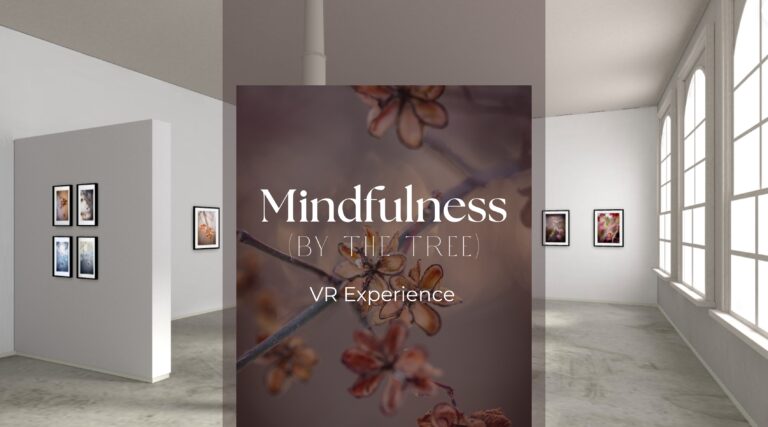
For me, mindfulness has become part of everyday life — especially during mindful walks with my camera. Many of the photographs you see here on my page, were created during these quiet, mind-clearing walks. For example The entire Mindfulness series was born out of hours spent contemplating the beauty of a single tree in a nearby park.
My mindfulness is not limited to walks. My framed photographs that decorate my walls remind me of mindfulness, gratitude, hope, and all the positive energy they bring. They are my little “reminders.” I look at them, take a deep breath, anchor myself in those feelings — and then continue running into everyday life. If you wish, my artworks can bring this gentle magic of mindfulness into your space. I’ve experienced it myself — it works. And I’m happy to share it with you [here].



Of course, the topic of mindfulness is far from exhausted. I’ll be returning to it with joy — calmly, mindfully, step by step — in future posts 🙂 . Just like I did with today’s blog-post, continuing https://musialjanicka.art/blog/why-mindfulness/ 🙂
Have a great day! 🙂
/Joanna